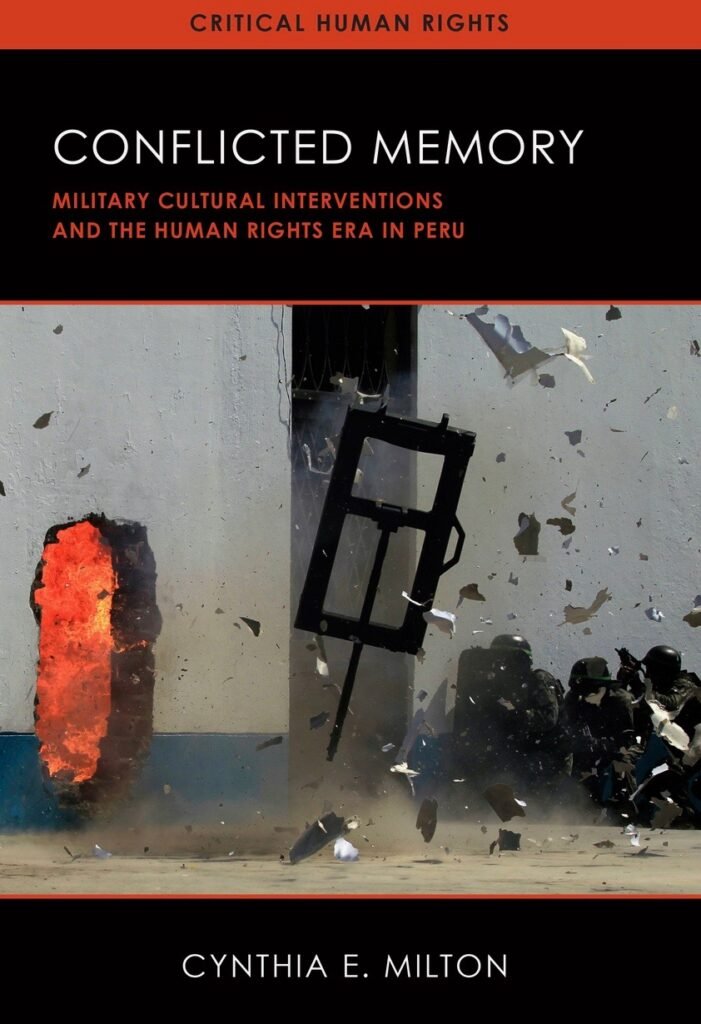
The story of internal violence and its aftermath in Peru is typically lumped together with the rest of Latin America. It is true that Peru, much like its neighbors, was riven by years of conflict as the military sought to suppress the forces of leftist insurgency. The murdered and disappeared, victims of torture and gendered violence, were also features of the Peruvian story. But as historian Cynthia Milton argues, the nature of the violence and the place of the military were very different in Peru. In contrast with its neighbors, leftist insurgency was a very real, not a fabricated threat. The Communist Sindero Luminoso, or Shining Path, was responsible for most of the violence in Peru. Moreover, the military never seized power and had a history as a progressive force in Peruvian society. Without recognizing these specificities we can’t begin to understand the outrage and injustice felt by the military when it found itself targeted by the truth and reconciliation and restorative justice processes that followed the conflict. How the image of the military in Peru has been successfully rehabilitated through diverse forms of memory work is the subject of this episode.
What comes as a surprise to most North Americans, Milton remarks, is the soft power of the Armed Forces in Peru. Milton notes in most Peruvian towns streets are named after generals or heroes of past wars. Children celebrate independence day on July 28th by dressing up in the national colors and marching in military style. “El Ejercito unido a la historia,” the hymn of the Peruvian Army, spotlights the inextricable ties that bind the Army to the nation. From the Inca Empire to the fight for independence, the Army portrays itself as being rooted in both the glories of the indigenous past and the key struggles that helped forge the modern nation. In a nation where roughly a quarter of the population self-identifies as indigenous, the Army claims to mirror Peru’s people while also being their chief defender.
With the fall of the Alberto Fujimori regime in 2000 and the conclusion of the long struggle with the Shining Path the public image of the military came under direct attack. The Truth and Reconciliation Commission (CVR), formed in 2000 to investigate crimes committed during the conflict, issued a Final Report that blamed state actors for 36% of the deaths and disappearances. State agents, the report added, committed widespread and systematic abuses that included “extrajudicial executions, forced disappearances, torture, massacres, sexual violence against women.” Moreover, the report highlighted that two-thirds of the victims were non-native Spanish speakers, the very same indigenous people the military claimed to represent and defend.
But this shift from earlier honor to present-day regret is fairly recent for many countries (my own included), and it is in this shifting yet overlapping terrain of a nineteenth-century conception of nation and the twenty-first century discomfort over a “difficult heritage” that the Peruvian Armed Forces find themselves caught by history. For with the turn to transitional justice and human rights, the Armed Forces find that their past actions are not understood as honorable or noble, even though they won the battle against Shining Path. Further compounding this problem of being both caught and tied to history-the nation and the military-is that this difficult heritage resides in living memory as opposed to faraway acts. Cynthia Milton, Conflicted Memory: Military Cultural Interventions and the Human Rights Era in Peru.
What proved especially damning for the military, were public revelations of the extent to which it was caught up in the corruption and abuse of power of the Fujimori regime. Videos surfaced showing Vladimiro Montesinos, head of the National Intelligence Service, bribing high ranking military officers. Other videos showed police and military officers offering their allegiance to Fujimori after he dissolved congress, suspended the constitution, and took control of the judiciary in his 1992 coup. Milton adds that the military was eventually implicated in everything from arms deals and narcotrafficing to stealing funds from its own pension fund.
What ultimately triggered a sense of outrage and injustice among the military, Milton argues, was the process of restorative justice. Hundreds of higher and lower level officers were put on trial with scores of convictions. Fujimori himself was convicted for human rights violations and given the maximum 25 year sentence. While Milton notes that Peru’s 35% conviction rate was significantly lower than the 90% rate in Argentina, many members of the military establishment felt deeply wronged. This response triggered an outpouring of memory infused cultural productions to right the record and restore the honor of the military. How these works confront the past is the focus of Milton’s book, Conflicted Memory: Military Cultural Interventions and the Human Rights Era in Peru.
First among the memory infused cultural productions that Milton identifies are books by state agents. Based on a mixture of research, documentation and first-hand accounts, Milton notes that some were self-published and of low quality while others were published by prestigious institutions. All of these books, Milton stresses, claimed to offer the verdadera verdad or verdadera historia (the real truth or true histories). They all disagree with the 70,000 estimate of victims offered by the CVR and reassert the earlier much lower number of 25,000. They begin with a dedication to men who served, defended and sacrificed for the nation. They end by decrying the way these same men have been treated. While they disagree with the findings of the CVR’s Final Report, they borrow from the same human rights language, namely that when we forget the past we risk repeating it. They cast security agents as the true victims of the conflict. They followed the orders of an established government only to have the rules changed after the conflict. Rather than taking responsibility for committing human rights crimes they argue that their rights were denied following the peace. From the testimonies of the families of fallen soldiers to photographs of the amputated limbs and scared bodies of those who survived, these books challenge conventional ideas about who were the true victims and who should be remembered as the heroes of the conflict. They deny the charges of systematic human rights abuses, pointing to isolated cases of individuals instead. These were “errors” caused by an “emotional state” rather than products of an institutional culture.
While many of the books about the conflict were a direct response to the CVR’s Final Report, the army also published its own report. Entitled, En honor a la verdad (In Honor of the Truth), the report was produced by a largely forgotten internal research organization, the Permanent Historical Commission of the Peruvian Army, made up of both officers and civilians. On the surface En honor a la verdad was a scholarly report complete with footnotes, bibliography and appendices of documents. In practice, if offered mostly opinions anchored in self-referenced military sources shedding little to no new light on the conflict. While the report was generally regarded as an official apology, Militon found little evidence of contrition. Also known as the Army’s Truth Report, En honor a la verdad was important in diminishing the authority of the CVR’s Final Report by framing it as only one version of the past. Moreover, the Truth Report cast the military in a much more favorable light. It was depicted as an institution ill-equipped and ill-prepared for the war, having to learn how to effectively engage with the enemy with insufficient support from the government. Collusion and corruption with the Fujimori government as well as systematic human rights violations received little attention or were flatly rejected. The crimes that were acknowledged were assigned to individuals who tarnished but in no way represented the honor and integrity of the military.
Some written accounts of the war challenge typical binary framing mechanisms such as perpetrator/victim or hero/enemy by casting the conflict as a war between brothers. Fought between fellow Peruvians, with little difference between combatants, it was relatively easy to switch from one side to the other. These books, notes Militon, are at odds with most other accounts by members of the military that present soldiers in a heroic light. The blurring of the categories of heroes and victims, Milton adds, undercuts the emphasis in the CVR Final Report on indigenous peoples as the primary victims of the war. Instead soldiers on all sides are presented as united in the struggle and suffering.
Peru lacks the kind public memorials, like the Villa Gimaldi Peace Park in Chile or the Navy Higher Mechanics School (ESMA) in Argentina, that spotlight state-sponsored violence. LUM (The Place of Memory, Tolerance and Social Inclusion) was the first such site in Peru. Originally proposed and backed with a large donation by the German government, the government of then-President Alan Garcia refused to accept the money. Only after considerable public protest and pressure was the project finally approved. With its modern architectural design and interactive technology LUM is very much in line with other memorial museums around the globe. Most of its content is devoted to the victims of the conflict, non-native Spanish speakers in particular. Milton notes the narrative of the museum emphasizes the importance of strengthening democratic institutions, empowering the people through education, and the resistance of the Peruvian people to the Shining Path and state violence.
Milton explains that visiting LUM it is possible to see the military as both perpetrators and heroes. One of the display cases offers detailed reminders of the massacre of innocent civilians at Putis where they sought the protection of the military. Children’s drawings and the remains of children’s clothing recovered from a mass grave site are used to tell the story of state violence. Re-created scenes of the exhumation of mass graves from military bases at La Hoyada and Cabitos add additional weight to the story of the crimes committed by state forces. Moreover, statements by victims of sexual abuse and torture clearly identify the state as a principal perpetrator.
Despite these criticisms the heroism and sacrifice of state forces and their central role in defeating the Shining Path are also clearly on display. Panels are devoted to the dramatic Chavín de Huántar commando raid in 1997 freeing all 72 hostages from the Japanese ambassador’s residence in Lima as well as the capture of Shining Path leader, Abimael Guzmán, in 1992. Quoting En honor a la verdad, one panel condemns unlawful acts committed by members of the military while emphasizing that in no way were these acts systematic or ordered by the military hierarchy. Panels devoted to the suffering of the Peruvian people caused by the conflict include members of the security forces and their families. Personal testimonies include the widow of an Army soldier, a disabled soldier, and the sister of a murdered police officer. These testimonies make it difficult, Milton stresses, to simply cast state actors as the perpetrators. Placing the stories of loss and suffering of state actors and their families alongside those of ordinary citizens creates what Milton describes as an equivalency of victimhood and suffering.
Peru does have other sites of memory pertaining to the history of internal conflict that Milton features in her book. In theory these sites are open to the public but in practice Milton found that they are difficult to access and are primarily meant to educate employees of the institutions that house them. On the 20th anniversary of the capture of Shining Path leader Abimael Guzmán, the National Police Terrorism Unit (DIRCOTE) created a gallery devoted to the Shining Path’s war against the state, DIRECOTE’s role fighting it and capturing Guzmán. The Armed Forces’ Monument to the Heroes of Chavín de Huántar commemorates the spectacular commando raid that freed 72 houses held for four months by the MRTA at the Japanese ambassador’s residence in Lima. The Armed Forces Monument is located on the grounds of the First Special Forces Brigade of the Chorrillos Military Academy in a replica of the ambassador’s home used to train the commandos. DIRCOTE’s gallery is in the National Police buildings in Lima. Both lack the curatorial polish and financial resources of LUM. Milton concludes that they intended more to educate and instill a sense of pride in current and future generations of security forces recruits.
Beyond offering its own narrative of the past through books, museums and sites of memory, the Armed Forces have also attempted to silence uncomfortable truths. For example, when the play La cautiva (the captive) presented the systemic violation of human rights by state security forces, DIRCOTE threatened charges of apologia al terrorismo (apology/incitement of terrorism). Milton notes while censorship laws have been repealed in Peru, the state can still use other means to the same effect. The charge of apology or incitement of terrorism, originating in the regime of Alberto Fujimori, is an open ended, highly subjective law that can be used to silence efforts to address difficult pasts.
The military in Peru has historically claimed a special connection to the nation’s past and a special role in representing its large indigenous population. The CVR’s Truth Report’s revelations of systemic human rights crimes committed during the long conflict with the Shining Path did serious damage to the reputation of the military. From books and movies to museums and censorship practices, the military has made tremendous gains in rehabilitating its reputation while silencing would be critics. The election of Keiko Fujimori, despite her father’s conviction and incarceration for human rights crimes committed in concert with the military, is only the most recent example of the willingness of Peruvians to reassess the past. Rather than forgiving and forgetting, efforts to re-remember the military as both heroes and victims of the conflict seems to have overshawed their role as perpetrators.
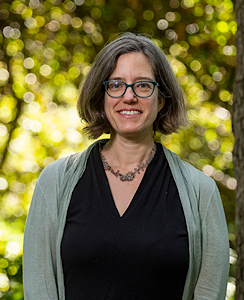
Cynthia Milton
Cynthia Milton is Professor of History at the University of Victoria in British Columbia, Canada. She is the author of The Many Meanings of Poverty: Colonialism, Social Compacts and Assistance in Eighteenth-Century Ecuador (2007), Conflicted Memory: Military Cultural Interventions and the Human Rights Era in Peru (2020).