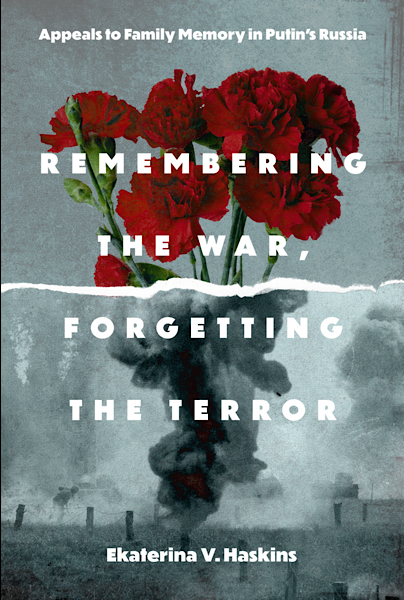
The challenge of any documentary director with a mission is to make the viewer care. What makes the 2026 Oscar award winning documentary Mr. Nobody Against Putin resonate so powerfully is the love and honesty that inspires it. This is a production that showcases the unvarnished horrors of Putin’s militarization of Russia following the start of the war in Ukraine through the eyes of one man, Pavel “Pasha” Talankin. A school teacher in a small town in the Urals, Pasha is the definition of a Mr. Nobody. His superpower, however, is his camera. He is the school videographer. Inspired by his deep love and attachment to his school and community, Pasha uses his camera to document Putin’s efforts to militarize Russian youth through the school system following the start of the war in Ukraine. From the Soviet-era industrial backdrop of the town of Karabash to Putin’s efforts to harness the spirit of sacrifice from the Great Patriotic War, memories function on multiple levels in this film. I had the opportunity to discuss the documentary with former guest and Penn State Professor of Rhetoric and Visual Communication, Katya Haskins. Katya’s book, Remembering the War, Forgetting the Terror: Appeals to Family Memory in Putin’s Russia, is now available in paperback.
Talankin is the events coordinator and videographer at Karabash Primary School #1, a small Soviet-era industrial town nestled deep in the Ural Mountains best known for the toxic fumes of its local copper smelting factory. For Talankin, Karabash is the only home he has ever known and it is one he loves deeply. His school, where he once studied, is more than a place of employment. It is a container for his fondest memories, a place of personal freedom and self expression, and an opportunity to nurture and inspire future generations of Russian youth. It is precisely because of Pasha’s deep attachment to Karabash and its people that he is revulsed when ordered to use his camera to document that his school is complying with the new patriotic education directives. Disgusted with the idea that he has become a pawn in the state’s propaganda machinery, Pasha drafts and submits his letter of resignation effective at the end of the school year. It is only when his chance response to a Russian social media content provider becomes an invitation by American director David Borenstein to turn his footage into a documentary that he decides to keep his job and transform it into an act of resistance. What ensues is an extraordinarily candid and personal account of the impact of the war in Ukraine through the experience of one community.
One of the most painful revelations for Pasha is how the school he loves is becoming a place of indoctrination and militarization. Events he once organized to bring joy to students, to allow them to explore and discover themselves, have been transformed into daily patriotic rituals. In tragic comedic fashion he helps teachers who struggle to recite words such as “demilitarization” and “denazification” in their new scripted lessons used to educate students on the reasons for the “special military operation” in Ukraine. Most teachers grumble about the extra workload but obediently comply, fearful that doing otherwise could cost them their job. Some, like the history teacher Pavel Abdumanov, the school’s representative of Putin’s United Russia Party, relish the opportunity. Dependent on Russian oil and gas, Abdumanov assures his students that the European support for Ukraine will soon break under the burden of rising energy costs.
Love for your country is not about putting up a flag. It is not about singing the anthem either. It is not about exploitation and propaganda. Love for your country means saying “we have a problem.” Pasha Talankin, Mr. Nobody Against Putin.
Katya Haskins finished her education in the Soviet Union during the transition from the Brezhnev to the Gorbachev era when the state was allowing for greater degree of intellectual freedom. She.noted that this was by no means a perfectly blissful period. There was a war going on in Afghanistan and several of her classmates were drafted into military service. When we talked in April, she noted that it was the fortieth anniversary of the Chernobyl disaster in 1986 which was one of the law straws for the regime. But living through the end of the Soviet totalitarian system, during a time when independent media outlets were emerging, when it became possible to investigate the dark spots in the country’s past, Katya was dismayed to see Russia under Putin moving in the opposite direction. Talankin’s feelings of isolation, the climate of fear and suspicion, recall an earlier, darker era from the Soviet past very much at odds with how Katya remembers the end of her school years.
Katya notes it is important to recognize that Talankin’s disgust with the Putin regime and willingness to fight back may be generationally specific. Katya explains that Talankin is part of what sociologists describe as the “unwhipped generation” or the first generation to grow up with a relative degree of freedom after the collapse of communism. This is the generation that gets more of its news from social media than television. It was this generation that was prominently featured among the tens of thousands of Russians who joined Navalny’s anti-corruption protests in 2017. Russian millennials are more open to foreign languages and foreign cultures with a greater degree of tolerance toward traditionally stigmatized groups such as gays and lesbians. This is a generation, Katya explains, that doesn’t just accept authority because it is authority, they follow their own mind. During the documentary Pasha proudly displays the color-coordinated collection of hundreds of books carefully organized in the bookshelves of his apartment. Katya observes that many of these books were published during the late Soviet era or 1990s, a period of greater intellectual freedom.
On a number of occasions Pasha’s frustration with the increasingly oppressive and interventionist nature of the Putin regime causes him to lash out with daring and often reckless actions. At point he blasts Lady Gaga’s rendition of the Star Spangled Banner over the school loudspeakers. On another he peels off the letter Z taped on the school windows in support of Russian troops and changes them to Xs in solidarity with Ukrainian refugees. On each of these occasions Pavel is reprimanded, but only verbally. Never does he receive any serious punishment. When I asked Katya whether teachers might not be taking full advantage of opportunities to resist the regime she stressed that fear is a real thing. She recalled how many Russians did not want the organization Memorial International and its campaign to preserve the memory of the victims of Stalin’s repressions to record the names of their family members for fear of reprisals. In the course of the documentary Pasha himself becomes aware that he is under surveillance by the Russian police and that he will have to leave the country to finish his work.
Memories of the Soviet past used to inspire patriotism in the present often function in a heavy-handed, authoritarian fashion in the documentary. From the new patriotic education directives to the creation of an All Russian Youth Organization personally presided over by Putin, it is the state that orchestrates how and for what purpose the past it remembered. So wary are the authorities about any deviation from the official line that teachers and eventually even students receive scripted instructions about what to say and how to respond. In one scene a student dutifully recites a scripted response to a question about Kyiv’s significance in the Great Patriotic War by proclaiming that it was the site of the Soviet headquarters and the first line of defense following the German invasion of the Soviet Union on June 22, 1941.
June 6th together with Victory Day on May 9th are the two most important days on the official Russian memory calendar. It is in the scenes featuring the May 9th commemoration where we see the importance of family memory in the cult of the Great Patriot War. Student participants in the Immortal Regiment parade, a grassroot initiative co-opted by the state, carry pictures of their ancestors who fought in the war. Remembering your ancestors, Katya stresses, is a powerful, primordial form of memory, a duty to remember which the state can harness for its own ends. A commemorative ceremony at a memorial to local workers anchors the national event in the community’s past. A priest who presides over the commemoration calls on those in attendance to live up to the memory of their forebearers who fought fiercely and sacrificed selflessly during the Great Patriotic War. Especially in these instances the documentary recalls how national memories are anchored both within families and localities in the service of the political present.
Memory, Katya notes, can often function in ambient ways as a backdrop which we may not even consciously register. In her book she offers examples that include everything from buildings modeled after Stalinist era structures to renovated subway stations or exhibitions that recall the time and triumphs of Stalin’s leadership. In Mr. Nobody Against Putin, music from the Soviet past is the principal form of ambient memory. The documentary begins with a children’s choir singing a classic Soviet-era children’s song, “May There Always Be Sunshine.” The film ends with “Wide is My Beloved Country,” another Stalin-era classic. These forms of ambient or sonic memory are subtle forms of indoctrination, evoking patriotic sentiments.
One of the most important memory themes harnessed by the state is the willingness to sacrifice for the nation. In a news clip featuring soldiers preparing for battle they are reminded that their deaths in the service of the nation will be memorialized in stone for future generations. Scripted history lessons remind students how cities like Kyiv held out for weeks against the German invasion of the Soviet Union. Family memories evoked through portraits of ancestors who fought in the war or through local commemorative ceremonies during Victory Day reinforce the messaging of the state.
But sacrifice can also function in opposition to the state. It is love of country that inspires Pasha Talankin’s willingness to sacrifice everything. On several occasions Pasha expresses his profound love for his home and the people of Karabash. It is a love, he stresses, that is more profound than the daily anthem-sing, flag-waving rituals and military exercises imposed by the state. From the fresh fall breeze or winter chill to the stained and aging Soviet-era apartment buildings to the tangle of pipes of the pollution spewing copper smelting plant, Pasha loves everything about his town, especially the people. It is above all his deep love for his students and the concern for their future that pushes him to lash out on several occasions against the state’s patriotic education program. It is this profound love for his home, and the conviction that you need to speak out when your country is in the wrong, that causes him to leave the only home he has ever known to share his documentary with the world. For Russia’s sake, and that of the world, one can only hope that more Russians will share Pasha Talankin’s version of love of country.
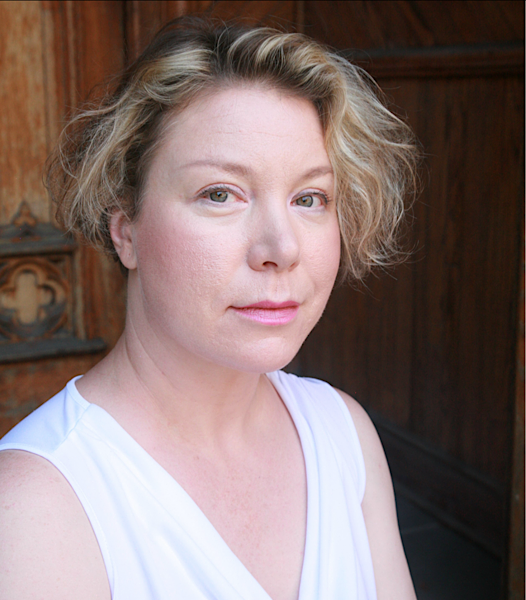
Katya Haskins
Ekaterina V. Haskins is a Professor of Communication Arts and Sciences and Visual Studies at Pennsylvania State University. She is the author of three monographs, including Popular Memories: Commemoration, Participatory Culture, and Democratic Citizenship (The University of South Carolina Press, 2015) and Remembering the War, Forgetting the Terror: Appeals to Family Memory in Putin’s Russia (Pennsylvania State University Press, 2024) as well as numerous articles on rhetoric, memory, and visual culture.