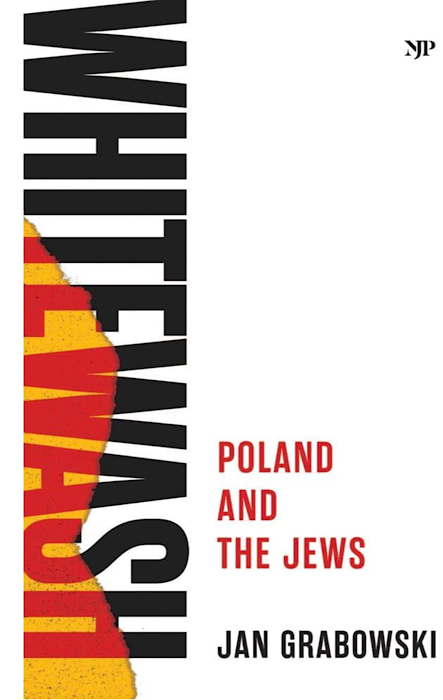
The Holocaust eradicated Poland’s Jewish community, the largest in the world outside the United States. Of the some three million Polish Jews who perished during the war, only one percent, or thirty thousand survived. University of Ottawa historian Jan Grabowski argues that without the active and willing participation of Polish gentiles, a far greater number of Jews would have survived. Yet through a process which Grabowski describes as Holocaust distortion, Polish official memory casts most Poles as heroic protectors and rescuers, deserving far greater recognition than they have received. Moreover, Holocaust distortion elevates Poles to equal and even greater victimhood status than the millions of Jews murdered in the extermination camps. Even the most revered sites, such as Auschwitz, have been transformed into memorials to Polish courage and sacrifice.
Poland’s connection to the Holocaust is unlike anywhere else in Europe. With the largest Jewish population in Europe, for the sheer sake of expediency, Poland became the site of the most prominent extermination camps. Five out of the six million Jews murdered during the Holocaust met their end in Poland. From France to the Balkans, even as the tide turned against the Germany war machine, Jews from across Europe were brought to Poland to have their lives extinguished in the extermination camps. Poland became and remains the de facto premier Holocaust remembrance site. According to its website, nearly 2 million visitors made the trip to the Auschwitz-Birkenau memorial in 2024.
Jan Grabowski argues that Poland has always been a “reluctant custodian of the memory of the Shoah.” This is partly due to a long history of antisemitism in Poland. If only one percent of Poland’s Jewish population survived the Holocaust, it was because Polish gentiles actively took part in denouncing, hunting down and even killing those who attempted to hide or flee. Poland’s Jews did not go silently to the slaughter, thousands attempted to escape. Based on his own field research, Grabowski estimates that some 200,000 tried to flee. Faced with the task of fighting a war on multiple fronts and administering vast stretches of conquered territory, the Germans simply did not possess the manpower to track down and round up vast numbers of escapees. Moreover, Polish Jews were physically indistinguishable from the general population. Only native Poles could easily recognize and identify Polish Jews based on differences in speech and accent.
The issue of Polish complicity in the implementation of the Final Solution, the scale of theft of Jewish property, the thousands of well-documented murders of Jews at the hands of the Poles, the deadly efficiency of Polish collaborationist police, the enormous scale of denunciations – all these difficult questions were taboo back in 2013, and they continue to be taboo today. Jan Grabowski, Whitewash: Poland and the Jews.
The image of walled, highly securitized Jewish ghettos depicted in Hollywood films is misleading. Jan Grabowski notes that in most cases only very minimal fencing or barbed wire separated the general population from Poland’s Jews corralled by the Germans into enclosed communities across the country. The real deterrent to escape was not any kind of physical barrier, obstacle, or even German military presence, but rather the surrounding Polish population. Ready to pounce and pray on anyone who attempted to escape, seeing the moment as an opportunity for personal enrichment, eager to rid themselves of an already despised religious minority, it was above all the attitudes and actions of the Polish people that explain the extraordinarily high death toll of Jews in Poland. There was simply little hope of hiding from or evading a local population that possessed an intimate knowledge of all the best places to hide.
There were certainly many Poles who risked and paid with their lives for helping or attempting to protect and shelter Jews during the Holocaust. Poland has the highest number of “Righteous” of any country in Europe. This is the designation given by Yad Vashem, the Israeli Holocaust memorial institution, to people who risked their lives to protect or shelter Jews in Europe during the war. But while this 7,318 number, one quarter of all recipients, may appear impressive at first glance, the size of the number quickly loses its luster when placed against the three million Polish Jews who perished during the Holocaust. The number of Righteous becomes even more suspect when we recall how only 1% of Poland’s prewar Jewish population survived the war.
The survival rate of Jews in Poland was among the lowest in Europe yet Polish authorities have long clamored for greater recognition for their role as protectors and saviors. Dissatisfied with the number of Poles acknowledged by Yad Vashem, the Polish government and even the Catholic Church vociferously claimed that millions of Poles came to the rescue of Jews. Jan Grabowski notes that this “Righteous Defense” became one of the central features of Holocaust distortion in Poland. Beginning in the Communist era the Righteous Defense fueled sentiments of resentment toward Jews for their ingratitude. Even when books like Jan Gross’s Neighbors shined a blinding spotlight on Polish complicity in the Holocaust, it was easier to deflect blame on the hateful few while exempting the virtuous majority.
Jan Grabowski emphasizes that the Polish state has devoted considerable resources to anchoring the myth of Poles rescuing the Jews. On the official memory calendar March 24th is now “The National Day of Remembrance of Poles who Rescued Jews Under the German Occupation.” March 24th has now become an annual celebration of Polish virtue where politicians of all colors and stripes can expand the number of Righteous at will. Grabowski notes that in his 24 March 2023 speech President Duda recalled the “one million poles who gave help to Jews in hiding.” The Pilecki Institute, one of the state memory agencies, has been charged with the task of expanding awareness of Polish sacrifices on behalf of Jews during the war. Over sixty monuments have been devoted to the memory of the Polish Righteous.
The Polish state employs a veritable army of memory workers to bolster and buttress its reading of the Holocaust past. The most important employer is the Institute of National Remembrance or IPN (Instytut Pamięci Narodowej). The IPN has some 2,500 employees, including 300 with doctoral degrees and professional titles. Operating on a global stage with generous funding from the state, Grabowski describes the IPN as “a clear and present threat to the memory of the Holocaust.” Above all the IPN is an organ of Polish nationalism, its employees have celebrated pre-war, antisemitic organizations while deflecting blame from the Polish population to the German occupiers for Polish massacres of Jews, such as at Jedwabne in 1941. The IPN is among the many state institutions that uses its resources and the weight of Poland’s legal organs to threaten, intimidate and ultimately silence all those who might question, challenge or offer an alternative to the official reading of the past. Jan Grabowski had to spend years untangling himself from the charges brought against him for his work on the Holocaust in Poland.
Even the most prominent Holocaust memorial sites have been distorted to tell the story of Polish victimization. In the case of Auschwitz, for example, Holocaust distortion works through a process that Jan Grabowski describes as “blending.” There were two camps at Auschwitz, a concentration camp and an extermination camp. The infamous, “Arbeit Macht Frei,” sign marks the entrance to the Auschwitz concentration camp. Poles were among the first to be interned at the Auschwitz concentration camp. Conditions were often horrific in concentration camps, some more than others, and prisoners were sometimes worked to death. But the purpose of concentration camps was labor whereas the function of extermination camps was murder. Blending works by obscuring the difference and commemorating Polish victimization at Auschwitz.
Jan Grabowski reminds us that distorting the past is not just an assault on history, it is an assault on democracy. In Poland, as in Hungary or the United States, when state authorities bury difficult histories or cast victimizers in a heroic light it perpetuates attitudes and sentiments that were often at the root of past crimes and injustices. Remembering how we treated the weakest and most vulnerable among us, Jan stresses, should be the test for any true democracy and a safeguard against the ever present threat of antisemitism, racism or nationalism. When we forget or distort the uncomfortable memories from the past it is the present and future of our democracies that we imperil.**
**I would like to thank Jan Grabowski for sharing the photo which I have used both as the landing page and header image for this episode.
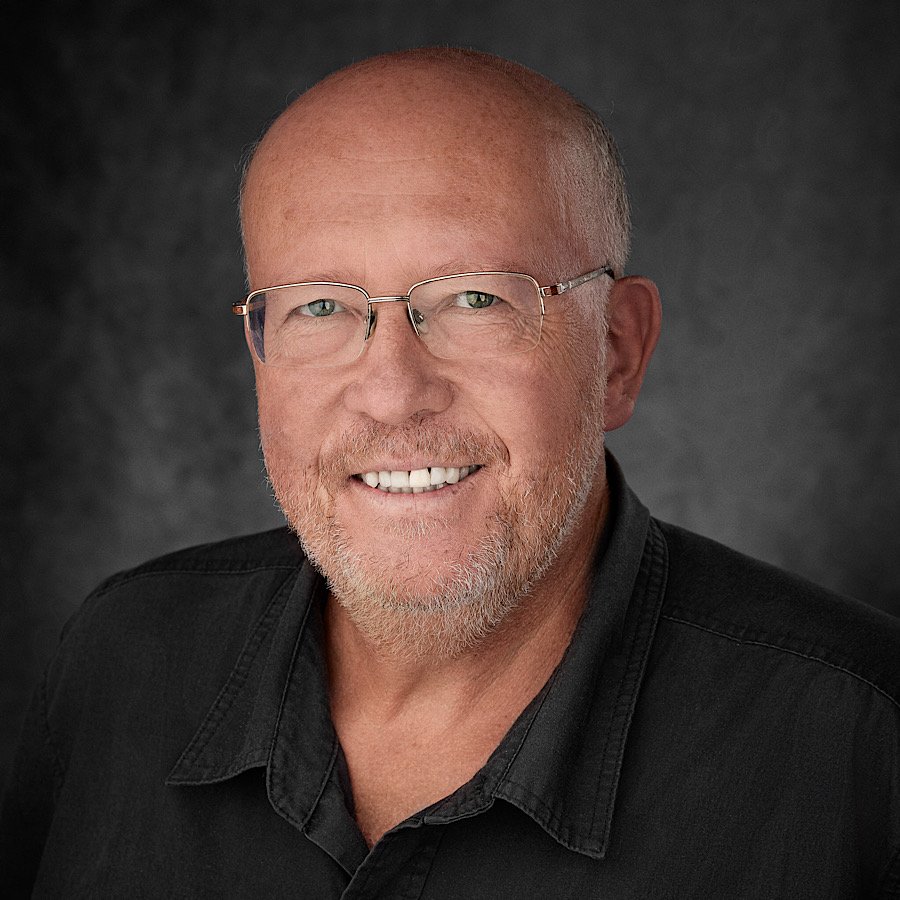
Jan Grabowski
Jan Grabowski is Professor of HIstory at the University of Ottawa. He is the author of Whitewash: Poland and the Jews (University of Toronto Press: 2025), Night without End: The Fate of Jews in German-Occupied Poland with Barbara Engelking (Indiana University Press: 2022), Hunt for the Jews. Betrayal and Murder in German-Occupied Poland (Indiana University Press: 2013), Holocaust. Studies and Materials (v. 2) (Polish Center for Holocaust Research: 2010), Rescue for Money: Paid Helpers in Poland, 1939-1945 (Yad Vashem- The International Institute for Holocaust Research: 2008), 'Je le connais, c'est un Juif!' Varsovie 1939-1943. Le chantage contre les Juifs (Calmann-Lévy: 2008),