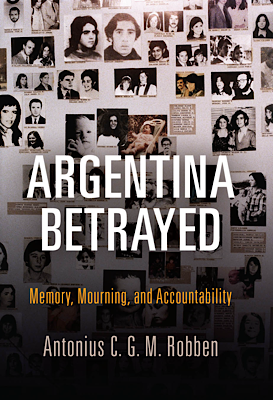
Sociocultural trauma experienced by nations isn’t just the result of unimaginable crimes and horrors. It is the repeated betrayals that make it impossible to mourn, to find meaning in the past, and to move forward. According to Tony Robben, Utrecht University professor emeritus of anthropology, this is what happened in Argentina. The military dictatorship that abducted, tortured, and murdered thousands of citizens came to an end in 1983. But ever since the military continues to hide the disappeared, while justifying its actions in the name of the defense of the nation. Successive governments have compounded this betrayal through ever shifting policies toward the past. Prosecutions, trials, convictions and memorializations give way to pardons, amnesties and forgetting, undermining trust in the government. Explaining the roller coaster of memory is the subject of Tony Robben’s book, Argentina Betrayed: Memory, Mourning and Accountability.
The crimes committed during the years of military dictatorship in Argentina stagger the imagination. Mothers were murdered after giving birth in captivity and their babies stolen. The detained were drugged and jettisoned alive into the Atlantic Ocean on the now infamous death flights. The military didn’t just betray the trust of the people by preying on them, it pretended to offer help to distraught families while it using lies and deceit to cover up the crimes. In some cases families turned on or abandoned their own. Even the upper ranks of the military showed no compassion for fellow officers whose sons and daughters found themselves ensnared in the repressive machinery of the state.
In the wake of the Falklands War embarrassment the dictatorship regime finally gave way to a democracy with the election of Raúl Alfonsin as president in 1983. Alfonsin denounced the crimes of the past and was determined to help the families of the disappeared recover their loved ones. Alfonsin’s government did succeed in paving the way for the historical trial and conviction of the junta that ruled Argentina from 1976 to 1983, a trial featured in the film Argentina 1985. However, the teams of investigators sent to detention centers throughout the country failed to recover the bodies of the disappeared and the military remained silent. Pressure from the military ultimately forced Alfonsin’s government to issue pardons and amnesties, shielding the military and police from prosecution.
The silence on the part of the military and the pardons and amnesties issued by the government are examples of forms of betrayal. Institutions that betrayed the trust of the people during the period of military rule continued to do so after the end of dictatorship. Repeated betrayed of trust can result in sociocultural trauma. If a country is unable to mourn its dead, if it can’t make sense of past crimes and injustices, it can get mired in a state of sociocultural trauma. Denied the possibility of arriving at some form of memory consensus, Argentina remains splintered into rival memory communities each with its own version of the past.
Tony Robben identifies two principal communities of memory in Argentina. The first is that of the military, veterans and their supporters. This is the community that staunchly defends the period of military rule as a necessary safeguard against the threat of communist subversion. If harsh measures were adopted, if innocent people became collateral damage, they argue that Argentina fared much better than other South American countries like Peru where the Communist Sendero Lumino’s claimed many more lives. If they are now arrested, prosecuted and convicted for their past actions they would gladly accept the punishment knowing that they saved their country from communist rule.
Argentina’s sociocultural traumas were not silenced, disavowed, or repressed when the dictatorship ended but were remembered, relived, and narrated. Adversarial groups became enmeshed in each other’s memory politics and hindered one another in overcoming their traumas. People could not mourn the losses and integrate their traumatic experiences in a collective understanding when others denied that those experiences had taken place. Antonius C. G. M. Robben, Argentina Betrayed: Memory, Mourning and Accountability.
The second community of memory is composed of those who opposed the military regime. The parents of the disappeared voice their sense of outrage that their sons and daughters, often privileged members of the middle class, could have gone to Europe, could have enjoyed a much more comfortable life of abundance. Instead, they went to places like the slums of Buenos Aires to teach the poor. For this they were tortured, murdered and disappeared by the military. Their memory needs to be kept alive through Memorial Day, the Day of Human Rights, through protests, museums, books and photos.
Tony Robben argues that Argentina, since the end of the military dictatorship, has experienced four distinct periods of what he describes as dynamic oppositions. The four periods are those of denial and disclosure (1983-1987), rebellion and defense (1987-1995), confession and reckoning (1995-2005), and accountability and revision (2005-2016)—the final corresponds to the year when Robben published his book. Each of these periods, which represent diametrically opposed forces in Argentina, were driven by larger frameworks of memory or narratives namely, the two demons theory or two terrorisms, state terrorism and finally genocide.
During the period of denial and disclosure, Robben argues the military and human rights movement were locked into conflicting frameworks of memory while the former guerillas were sidelined. The two chief opposing camps during this period were the military and the human rights movement. The military played down the violence toward civilians while framing the conflict as a fight against subversion, revolutionaries, a war between good versus evil. The human rights movement, which had long defended and tried to give voice to the victims of the dictatorship, cast the past in terms of state terrorism. The government of Raúl Alfonsin presented the past in terms of the two demons theory, or two terrorisms, in which the junta and their guerrilla opponents both engaged in forms of terror. It was this framework of understanding that justified investigations into past crimes and the trial and conviction of the junta.
The period of rebellion and defense represented a memory retreat in Argentina. Unease among the military about expanding prosecutions, caused the government to issue the Full Stop Law (1986) (Ley de Punto Final) which imposed a narrow, 60-day window for all future charges to be filed. Regardless, six military bases rose up in rebellion causing the government to pass the Due Obedience Law (1997) (Ley de Obediencia Debida) amnestying most officers of all except for the most serious crimes—rape, theft and kidnapping of babies. Tony Robben explains this was also a period of hyperinflation when the national currency lost most of its value and larger economic concerns tended to overshadow preoccupations about justice and the memorialization of the past.
It was during this time, however, that the human rights movement and the framework of state terrorism continued to gain traction. It did so largely through the work of the forensic anthropology movement, the exhumation of mass graves, and the continued protests of the Mothers of the Plaza de Mayo demanding the recovery of their disappeared loved ones. It was during this period that memorialization efforts to preserve sites associated with state terror, to erect memorials to the victims and to record the stories of the survivors gained momentum.
The period of confession and reckoning refers to the first admissions on part of the military human rights violations. Navy Captain Adolfo Francisco Scilingo sparked a popular outcry by admitting to participating in the death flights when drugged detainees of the regime were dropped alive to their deaths from planes in mid flight. While using the two demons theory to defend the practice, Army Commander General Balza broke the code of silence within the military by recognizing the use of torture. Balza and Scilingo’s admissions caused the Congress to reverse course on its policy of amnesties. Planning began for Argentina’s Memory Park and a memorial to the victims of state terror which became the new dominant memory framework for the period of dictatorship. In 2001 the city of Buenos Aires made May 24th a Day of Memory, commemorating the 1976 military coup. In 2002 the Space for Memory Institute was created to preserve the memory and history of the events that took place during the dictatorship.
The final period of accountability and revision stretches from 2005 to the publication of Tony Robben’s book in 2016. Memories about the crimes of the military regime continued to expand while aging military officers persisted in justifying past actions in defense of the nation. From the mid-2000s, under the influence of an international human rights movement the new interpretative framework of genocide took shape. Genocide became means of conveying the scale and gravity of the crimes of the military regime and the responsibility of the people of Argentina. Former detention centers, such as the Navy Mechanics School, were turned into museums and renamed as extermination sites. It was during this time that the state began to fund the Space for Memory Institute while younger supporters of the military fought to preserve the memory of victims of guerrilla violence.
When asked to comment on developments since the publication of his book Tony Robben argued that Argentina has once again swung back in the direction of forgetting. With the election of Javier Milei as president of Argentina, sites of memory associated with the dictatorship have lost funding and have fallen into disrepair. Similarly, efforts to pursue prosecutions, or to find the disappeared have been starved of funds. The memory framework of the military is once again triumphant, and the memory work of the past is now being destroyed. **
**I would like to thank Yovanna Pineda for allowing me to use her photos as the landing and header images for this episode. The photos appeared in her article “Graffiti Art, Protest and Memory in the Plaza de Mayo Buenos Aires City.”
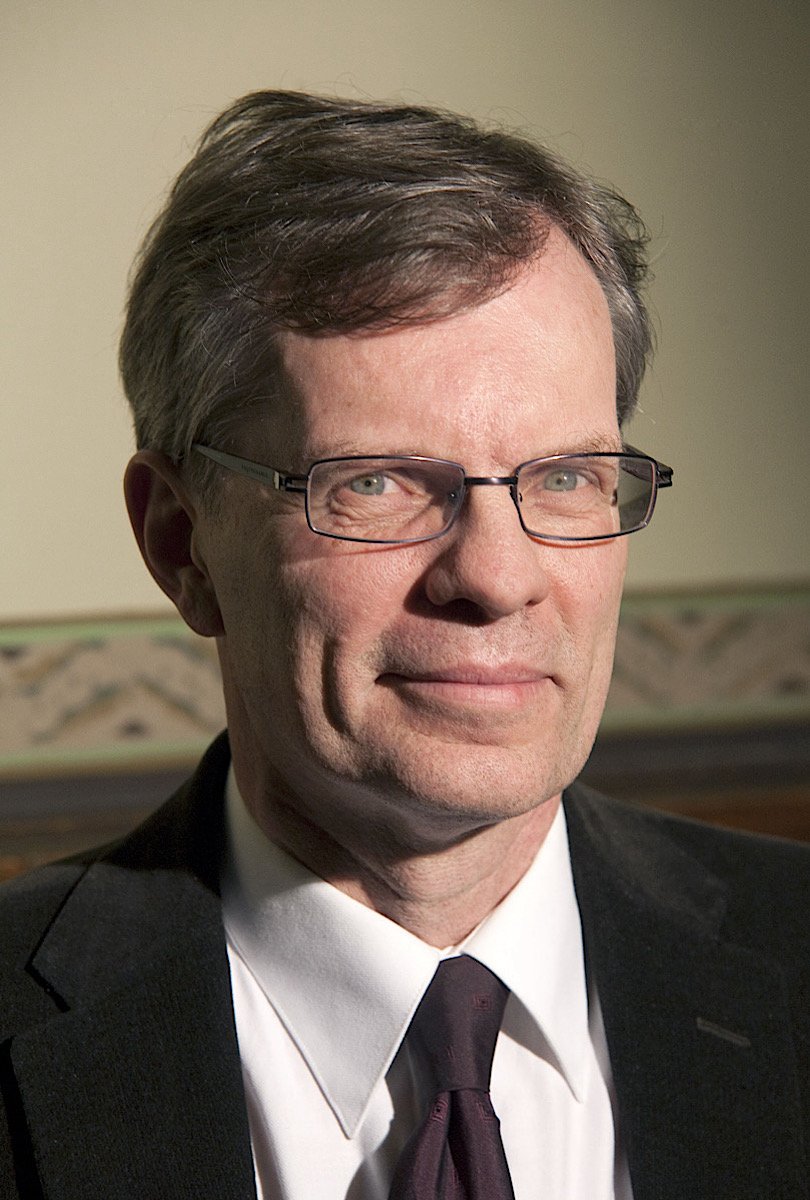
Antonius C. G. M. Robben
Tony Robben is Professor Emeritus of Anthropology at Utrecht University. His books include, Perpetrators: Encountering Humanity's Dark Side (co-authored by Alexander Laban Hinton). Stanford: Stanford University Press. [2023 Choice Award from the American Library Association], Argentina Betrayed: Memory, Mourning, and Accountability. Philadelphia: University of Pennsylvania Press. [Spanish edition: 2021. Argentina traicionada: Memoria, duelo, justicia. Barcelona: Anthropos editorial/Siglo veintiuno], Political Violence and Trauma in Argentina. Philadelphia: University of Pennsylvania Press. [2006 Textor Prize from the American Anthropological Association. Spanish edition: 2008. Pegar donde más duele: Violencia politica y trauma social en Argentina. Barcelona: Anthropos editorial], Sons of the Sea Goddess: Economic Practice and Discursive Conflict in Brazil. New York: Columbia University Press, 1989.