The duty to remember has become a moral imperative in today’s memory culture. But reporter and political analyst David Rieff argues that this belief is often misinformed and misplaced. In Praise of Forgetting: Historical Memory and its Ironies, Rieff argues that sometimes forgetting is the better choice. This is especially true because conflicts often have no clear winner or loser. The silencing of the guns, Rieff contends, is a far more desirable outcome than prolonging conflicts by perpetuating irreconcilable memories of past wounds, disputes, and grievances. There are cases, however, where remembering is possible. These are instances where there is a clear consensus about that need to remember. Sadly, however, there is little proof that the past repeats itself or that we have the willingness to learn from past historical wrongs.
The duty to remember, Rieff argues, has become almost sacrosanct. But in many instances remembering is not only ill advised but also dangerous. Having covered a number of protracted conflicts around the globe, Rieff stresses that bitter memories can entrench warring parties in never ending conflicts. In the case of Ireland, a country which has long been particularly close to his heart, Rieff notes how the simple singing of nationalist songs could trigger memories that undermined efforts to forge agreements between warring parties in Northern Ireland. It was only the willingness to leave the past aside and to integrate former foes into a new power sharing agreement that became the basis of the success of the Good Friday Agreement.
There are instances where remembering the past is desirable and appropriate. For Rieff these are cases where there is a clear consensus about the need to remember. In the case of the Southern Cone, in countries such as Argentina, Chile and Uruguay, there was considerable popular support to confront the past. Memory politics continues to be a powerful driving force in these countries. From countries where remembering is ill advised to those where it is desirable, there may be examples in between where a desire to forget gives way after time to a desire to remember or where memory fades into forgetting. What matters most for Rieff is a solution which resolves conflict and minimizes harm.
But is it not conceivable that were our societies to expend even a fraction of the energy on forgetting that they now do on remembering, and if it were accepted that in certain political circumstances at least the moral imperative might be Nietzsche’s “active forgetting,” not Santayana’s “those who forget the past are condemned to repeat it,” peace in some of the worst places in the world might actually be a step closer? David Rieff, In Praise of Forgetting: Historical Memory and its Ironies
In cases of seemingly intractable disputes over the past Rieff suggests that we can all benefit by a sense of humility in the face of the grand sweep of time. Over the course of hundreds of years political contexts inevitably change rendering past divides and disagreements irrelevant. The Norman conquest of England is one example of an event which created a rift that lasted for centuries but no longer has any relevance today. Within the even larger sweep of geological time all will be inevitably forgotten. While we must and should live within historical time, an awareness of our own insignificance can remind us that we have the ability to choose what to remember or forget.
It was Rieff’s experience covering the war in Bosnia that first alerted him to the perils of memory. Growing up in the later part of twentieth-century America he too had embraced the optimism of Santayana that we can and should learn from the past. Although he had already covered other foreign conflicts, what Bosnia made clear were the stark historical divides and the ways the past was used to fuel violence in the present. For Serb leaders attempting to rally support against Bosnian Muslims dates such as 1389 (Battle of Kosovo) or 1453 (Fall of Constantinople) were evoked to frame the conflict as an ongoing struggle against the threat of Islamic aggression. In the end, Rieff came to believe that the past just became a justification for the killing.
Rieff is careful to explain the difference between collective memory and what he calls critical history. He argues that there really is no collective memory, only individual memory. Larger groups do achieve a consensus about how to remember the past but this, Rieff argues, is typically shaped by the needs of the present which are constantly in flux. The problem with the present, Rieff contends, is that we spend too much time judging the past rather than trying to understand it on its own terms. This is precisely what critical history does. Critical history recognizes that the past will always be a foreign country. We may have our own opinions about the cast of characters we encounter but when we get lost in our own judgement we fail to appreciate the foreignness of the past.
Recognizing the foreignness of the past does not mean that we should relinquish our democratic values in the present. « I’m pretty pro military, » Rieff commented, « but I never did see why traitors to the Republic should have bases named after them. » When confronting the past, Rieff explained, we need to consider two questions, sanctions and the truth. Sometimes the only way to achieve lasting peace is to avoid sanctions. Lincoln, Rief believes, was right not to have executed the generals and leaders of the Southern states after the Confederacy capitulated. Mandela was right to have avoided harsh punishments for the leaders of the former Apartheid state in South Africa. In both cases, harsh sanctions risked perpetuating past conflicts.
Rieff holds Mandela in high esteem for recognizing that it is possible to seek the truth while promoting reconciliation. The truth and reconciliation process in South Africa was based on the promise made to the participants in the former apartheid regime that if they gave a full and honest accounting of their past misdeeds they would not face criminal charges. Here, Rieff contends that it is possible to air and work through past grievances while recognizing that pursuing justice is sometimes not worth the cost. This is what Rieff describes as prudential thinking, or putting the well being of the nation before the desire for revenge.
One of the problems with the current age, Rieff believes, is that it is being driven by the forces of narcissism. We are living in a time where everyone believes that you can become anything you want. We fail to recognize that there are always forces beyond our control and life is finite. Yet Rieff adds that there is no going back to an earlier era of national memorials devoted to national heroes. Even in countries like Ukraine, where Rieff now spends a substantial part of the year teaching and covering the conflict, memorialization is more in line with contemporary practices of listing names on abstract memorials rather than erecting statues. Names endure whereas statues to heroes tend to fall victim to the ravages of time.
Is Ukraine an example of a conflict that could end without a clear winner or loser where forgetting the crimes of the past will be the only way to secure peace in the future? Rieff argues that because this is an ongoing war it is too early to tell. There have been undeniable war crimes however, in places like Bucha, where the families of the victims deserve to know who is responsible. Whether this will result in future court cases in The Hague, however, Rieff is highly skeptical. More likely is that after the war returning Ukrainian soldiers will recall the corrupt past of their own county and demand a better future.
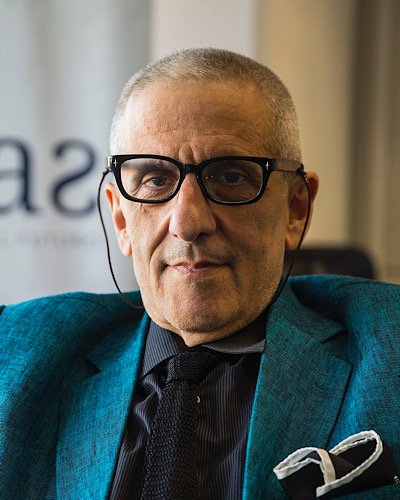
David Rieff
David Rieff is a journalist, cultural critic, essayist, and policy analyst. He has reported on wars and humanitarian crises from Bosnia through Rwanda and the Democratic Republic of Congo, Sierra Leone, Liberia, Israel-Palestine, and Iraq and Afghanistan, to Ukraine today. His books include Slaughterhouse: Bosnia and the Failure of the West, At the Point of a Gun: Democratic Dreams and Armed Intervention, A Bed for the Night: Humanitarianism in Crisis, The Reproach of Hunger: Food, Justice and Money in the 21st Century, In Praise of Forgetting: Historical Memory and its Ironies, and Desire and Fate.